|
There is a distinct gravity to holding a Nywele vase for the first time. Weighing from 4.5 to 8 pounds of solid mouth-blown glass, it feels substantial, grounding, and entirely present in your hands.
Yet that visual and physical weight carries a quiet paradox.
When you spend months designing a piece, coordinating across time zones, and tracking a shipment across continents, the anticipation of opening that box is unmatched. But I quickly learned the emotional whiplash of high expectations and the need for perfection.
Between the furnace in Kenya and your home, a lot can change. Perfection is tested on the road, where the glass is exposed, and also in the furnace, where colour is not fully in our control.
|
|
The Lesson of the Transit Road
It has been an eye-opening education in a simple, hard truth: shipping providers do not care about your shipment the way you do.
The excitement of tracking a shipment across oceans and unboxing new pieces from Kenya can pivot to heartbreak in a single second. When I open a securely packed box from Kitengela only to find a stash of shattered glass in place of a vase, it is a sharp, humbling reminder that no matter how solid our Nywele feels, glass remains inherently vulnerable.
That loss has more than one layer. Beyond my own, I feel it for the artisan. When someone pours a piece of themselves into shaping an object, its breaking before it has had the chance to find its home isn’t just breaking inventory. It is breaking a piece of human labour and expression.
|
| |
The excitement of tracking a shipment across oceans and unboxing new pieces from Kenya can pivot to heartbreak in a single second |
|
|
On our end, we ship every vase with extreme care. The box containing the vase travels inside a second protective box, because we anticipate the worst-case scenario from handlers. We also offer 30-day returns, so clients can bring a piece home with confidence.
|
|
The Vulnerability of Fire and Colour
That same fragility extends far beyond logistics. It exists at the furnace itself. Just as glass is vulnerable in transit, the artistic process is equally delicate and unpredictable across an ocean.
Bridging cultures, expectations, and time zones inevitably leads to friction, and our biggest misunderstanding to date came down to colourways. What is considered brown in one culture isn’t necessarily brown in another. I typically receive messages from Kenya around 5am, which is midday in Nairobi. So by the time I get back to them it’s the end of the day there, and the colour question lingers.
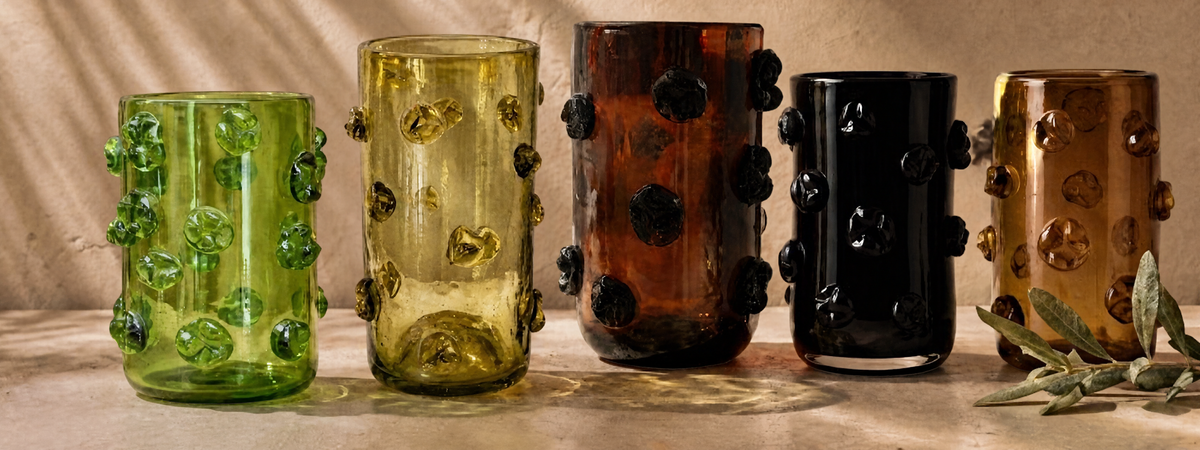
When we received the first sample batch of the Nywele, it arrived in four distinct, stunning colours. But translating samples into production batches revealed the unpredictable nature of molten glass chemistry, the imperfect process required to produce the perfect Nywele. A molten glass batch starts at its most saturated, purest colour; as more pieces are created and the pot depletes, the colour naturally fades, losing its intensity and getting lighter and lighter.
|
| |
Translating samples into production batches revealed the unpredictable nature of molten glass chemistry |
|

|
|
|
Re-creating that exact hue months later when starting a new melt is an immense technical challenge for the artisans. At the beginning, it was pure trial and error. There is nothing quite as stressful as trying to match a specific colour that our already published photography captures so nicely, with its rich tone, when the shipment from Kitengela arrives looking entirely different. What starts as a frustrating setback (a colour batch that didn’t match the spec sheet) often turns into a revelation. Those unexpected shifts are how we discovered extraordinary new tones like Citrine Moss and Dark Umber. We make a point of grouping the various colourways to give our clients an accurate product listing, which is why we have grown from three to five colourways. We’ve also wrestled with sizing variations: vases arriving much larger than expected or smaller (hence our accidental stash of mini Nywele vases...). Each product page lists the estimated dimensions for each vase, so clients know what they are choosing. No two Nywele vases are identical because they cannot be. Each with its own character.
|
| |
When you step back, let go of rigid industrial expectations, and evaluate the pieces for what they actually are, you realize that without those imperfections and missteps, the Nywele collection would never have evolved into what it is today. |
|
|
Finding Perfection in the Unplanned
Working with handmade items teaches you some lessons: there is grace in flexibility, and there is learning in letting go of rigid control. We are meticulous about packaging to ensure the Nywele survives its journey into our clients’ homes, and we navigate the balance between embracing what each new batch of glass brings and remaining uncompromising about the beauty of what emerges. Whatever each new batch brings, whether colour or size, our clients can see every detail on our product pages, from a full colour description to the size.
|

|
|
I’ve also learned that when you step back, let go of rigid industrial expectations, and evaluate the pieces for what they actually are, you realize that without those imperfections and missteps, the Nywele collection would never have evolved into what it is today. In craft, as in life, learning to accept the unplanned is the only way forward.
|
|
The “imperfections” aren’t flaws to be corrected. They are the proof that a human hand touched it, fire shaped it, and a journey brought it home.
|
| |
| Nywele Vase Umber |
| ★★★★★ |
| Great vase, feels like a work of art |
| “Lovely vase. It honestly feels like an art piece. I love the colour too, when the light hits it its even more beautiful! I’d love to get it in moss as well!” |
| Joy, August 5, 2026 - Verified Buyer |
|
|
|


Dejar un comentario
Este sitio está protegido por hCaptcha y se aplican la Política de privacidad de hCaptcha y los Términos del servicio.