


Moins c'est mieux : l'art de bien choisir
September Collective La Revue
Plaidoyer
contre le superflu.
Pourquoi les choses qui comptent le plus sont fabriquées lentement, par des gens qui se soucient profondément de ce qu'ils laissent derrière eux.
Écrit par Leslie Rivers, fondatrice de September Collective | Juin 2026 | Lecture de 5 minutes
01 La Recherche
Quelque chose change discrètement.
Une révolution silencieuse est en cours dans les foyers des personnes attentives. Elle ne s’annonce pas à grand bruit. Elle ressemble plutôt à un vase soufflé à la main en verre recyclé qui capte la lumière du matin différemment chaque jour. À un panier que trois semaines ont été nécessaires à une personne pour le tresser. À un tabouret qui porte la mémoire d'un arbre. À une lampe qui a commencé comme un morceau de bois jeté.
C'est un éloignement du "plus" et un rapprochement du sens.
Mais le sens n'est possible que lorsque ce que vous tenez est réel. Et c'est là que les choses se compliquent.
02 Le problème
Le problème avec le "fait main"
En chemin, les mots que nous utilisons pour signaler la qualité ont cessé de signifier ce qu'ils signifiaient autrefois. Fait main. Artisan. Petite série. Source éthique. Ils apparaissent désormais sur tout, sur des produits fabriqués en usine, sur des étiquettes conçues pour suggérer une histoire qui n'existe pas, sur des choses produites rapidement et à bas prix et habillées du langage de l'artisanat pour justifier un prix plus élevé.
Si vous avez déjà rapporté quelque chose chez vous en raison de ce qu'il prétendait être, et que vous vous êtes ensuite demandé si c'était vrai, vous avez raison de vous poser la question. Pour quiconque recherche une décoration intérieure véritablement éthique, ce paysage est particulièrement difficile à naviguer. Et cette incertitude a un coût. Pas seulement financier, mais dans la déception silencieuse de posséder quelque chose qui ne porte pas le poids que vous espériez.
C'est le véritable plaidoyer contre le superflu. Pas plus d'achats, mais plus de rigueur. Plus de questions. Plus d'insistance sur le fait que les objets que vous apportez chez vous sont exactement ce qu'ils disent être.
Un objet fabriqué lentement, par quelqu'un que vous pouvez nommer, dans un lieu que vous pouvez situer, durera plus longtemps que dix objets qui n'avaient aucune de ces réponses.
Chez September Collective, nous ne représentons pas un créateur tant que nous n'avons pas compris celui-ci, son processus, ses collaborateurs, son lieu. Non pas parce que nous sommes puristes, mais parce que nous savons que lorsque vous rapportez quelque chose de chez nous, vous devez pouvoir raconter son histoire complète. Cette exigence n'est pas accessoire à notre travail. C'est l'essence même.
03 Les créateurs
Des objets avec une histoire à raconter
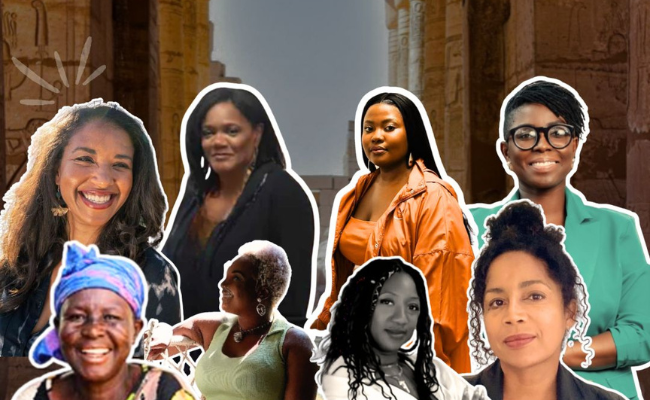
Pour chaque pièce que vous trouvez ici, qu'il s'agisse d'un panier tressé à la main, d'un objet sculptural ou d'un meuble, la considération est la même. Mais pour moi, cela va plus loin que la recherche. Avant que September Collective ne propose le travail d'un créateur, je demande des échantillons. Je les intègre à ma maison, je vis avec eux et j'étudie leur résistance et leur toucher. Cette évaluation personnelle n'est pas une formalité. C'est la norme. Lorsqu'un échantillon ne répond pas à nos critères, nous en faisons preuve de transparence et nous passons à autre chose. Chaque créateur que vous trouvez chez September Collective est là parce que son travail a véritablement mérité sa place.
Voici quelques-unes de leurs histoires.
Fondée en 2000 par Josephine et Kweku Forson et désormais dirigée par leur fille Audrey, Tekura est une entreprise familiale construite autour d'une seule conviction : que le design africain a sa place sur la scène mondiale, et qu'il doit y arriver à ses propres conditions. Travaillant avec des artisans locaux qualifiés à Accra, Tekura fabrique à la main des meubles et des objets de décoration à partir de bois recyclé et issu de sources responsables, s'inspirant des cultures Ashanti et Fanti. Leur table Djembe a été présentée dans le film Black Panther : Wakanda Forever. Lorsque l'artisanat est aussi réfléchi, le monde le remarque.
Découvrir TekuraFondé par Candice Lawrence au Cap, Modern Gesture est un studio de design qui trouve la beauté là où d'autres pourraient l'ignorer : chutes de bois, corde cirée, métaux récupérés. À partir de ces matériaux, Candice et son équipe fabriquent des luminaires, des articles pour la maison et des objets qui portent une sensibilité africaine distincte tout en étant entièrement contemporains. Chaque pièce est fabriquée lentement, l'expérimentation étant au cœur du processus. Chaque variation de texture ou de forme fait partie de l'œuvre, et non un défaut.
Acheter Modern GestureÀ Bolgatanga, une ville de la région du Haut Ghana, connue simplement comme "la ville des paniers", une communauté de plus de 250 artisans tisserands Gurunsi pratique une tradition plus ancienne que personne ne peut se souvenir. Baba Tree travaille directement avec ces tisserands, honorant les techniques de vannerie Bolga transmises de génération en génération tout en créant un espace pour l'émergence de nouveaux motifs et formes. Fabriqué à partir d'herbe d'éléphant en utilisant le rythme et le flux propres à chaque artisan, chaque panier est un objet singulier. Une empreinte. Une signature. Un morceau du temps de quelqu'un qui vit maintenant dans votre maison.
Acheter Baba TreeChez Kitengela Glass à Nairobi, l'un des ateliers de verre les plus célèbres du Kenya, chaque pièce commence par le feu. Les artisans recueillent du verre recyclé en fusion au bout d'une canne de soufflage et, par un processus de respiration et de rotation affiné au fil des années de pratique, lui donnent forme. Aucun moule ne dicte la forme. Aucune machine ne la répète. Le processus lui-même décide où chaque pièce va, et ce n'est jamais deux fois la même chose. Notre collection de vases Nwele a été fabriquée ici, issue d'une collaboration entre le design interne de September Collective et la maîtrise du four par Kitengela. Ce qui arrive chez vous n'est pas seulement un objet. C'est une trace du souffle de quelqu'un.
Découvrir la collection Nwele04 La norme
La norme qui vaut la peine d'être fixée
Ce qui relie ces créateurs n'est pas seulement la géographie ou le matériau. C'est le fait que nous pouvons vous dire exactement qui a fabriqué ce que vous tenez, comment cela a été fabriqué et pourquoi cela ne tombera pas en morceaux dans deux ans. Ce n'est pas une petite chose. Sur un marché plein d'approximations, c'est tout.
Le design africain en petite série n'est pas une tendance. C'est un engagement envers une manière de fabriquer entièrement différente. La philosophie est simple, et elle vous fera économiser de l'argent à long terme : achetez une chose fabriquée avec une attention totale, par quelqu'un qui n'avait aucun intérêt à couper les coins ronds, et elle survivra à une douzaine de choses qui ne l'étaient pas. L'objet que vous avez choisi avec soin il y a cinq ans est toujours sur votre étagère. Celui que vous avez acheté rapidement est parti, et vous ne vous souvenez plus à quoi il ressemblait.
Achetez une fois. Achetez bien.

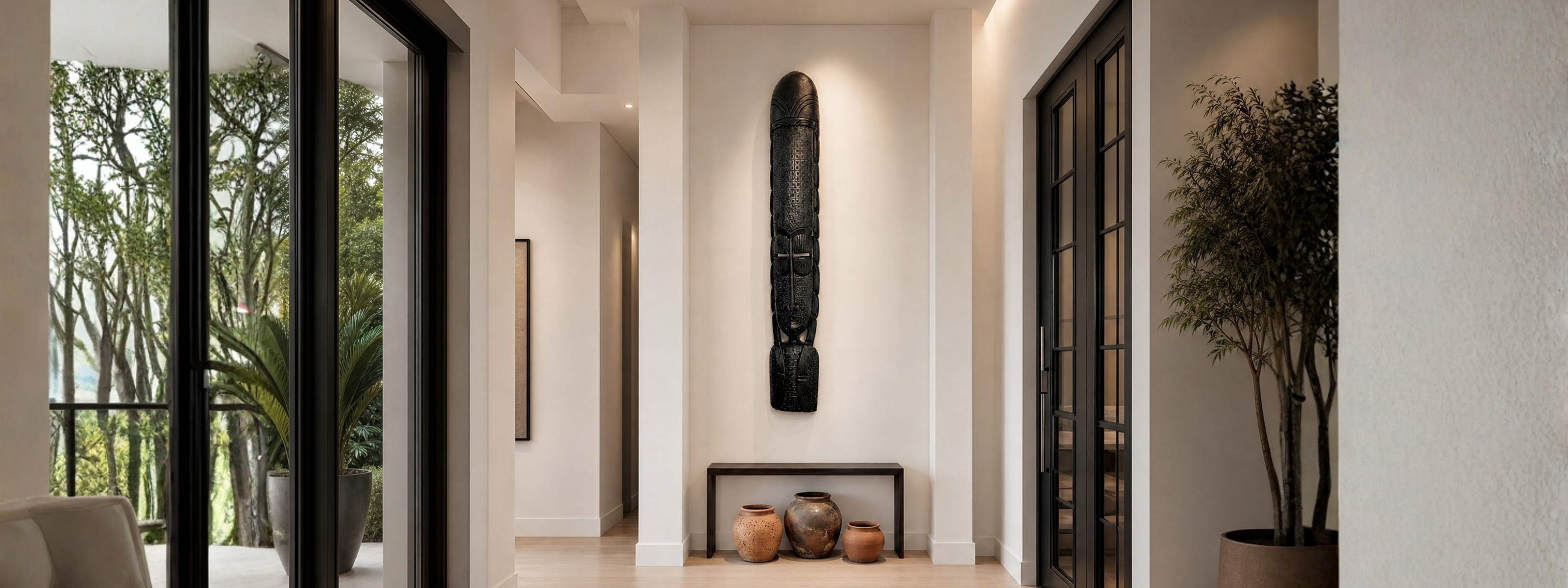
Tekura Designs · Sculpture de guerrière africaine · Accra, Ghana
Voici donc la norme que nous vous proposons. Avant de ramener quelque chose chez vous, posez-vous trois questions : Est-ce que je sais qui a fabriqué ceci ? Puis-je raconter son histoire complète ? Est-ce que je le voudrai encore dans dix ans ? Si la réponse aux trois est oui, vous ne dépensez pas plus. Vous dépensez une seule fois.
Et si la question de savoir à qui revient le mérite du design africain vous interpelle, nous l'avons explorée plus en détail dans notre éditorial Le Mois de l'histoire des Noirs commence à la maison.
Les choses les plus significatives ne sont jamais pressées.
Laisser un commentaire
Ce site est protégé par hCaptcha, et la Politique de confidentialité et les Conditions de service de hCaptcha s’appliquent.